
Xinzuo vs Hezhen: Nakiri Comparison
A nakiri lives and dies by two things: how thin the geometry is behind the edge and how flat the profile stays across its length. Xinzuo and Hezhen make very different arguments about which matters more. The Xinzuo Ji leans on a hard Japanese-style core with a decorative Damascus jacket. The Hezhen 7.4" uses tougher German-inspired stainless in a cleaner, more utilitarian package.
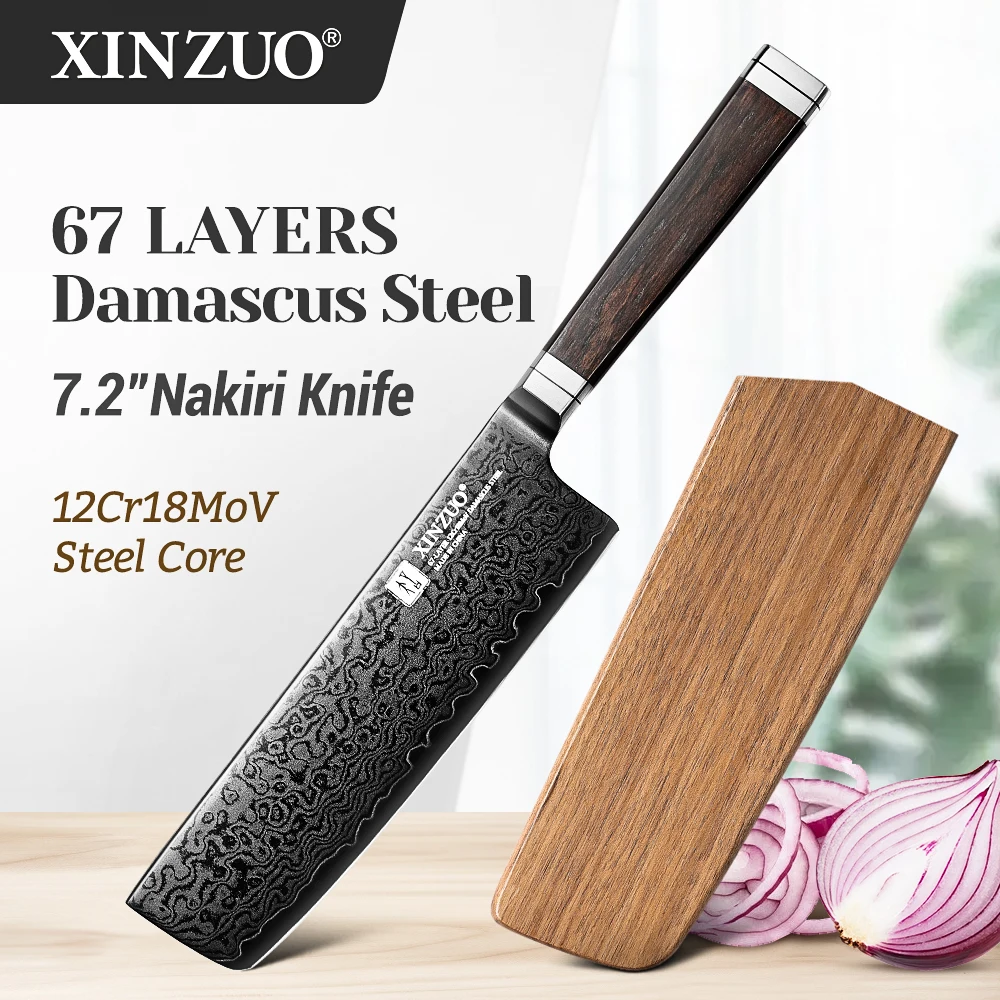
Xinzuo 7.2" Ji Nakiri
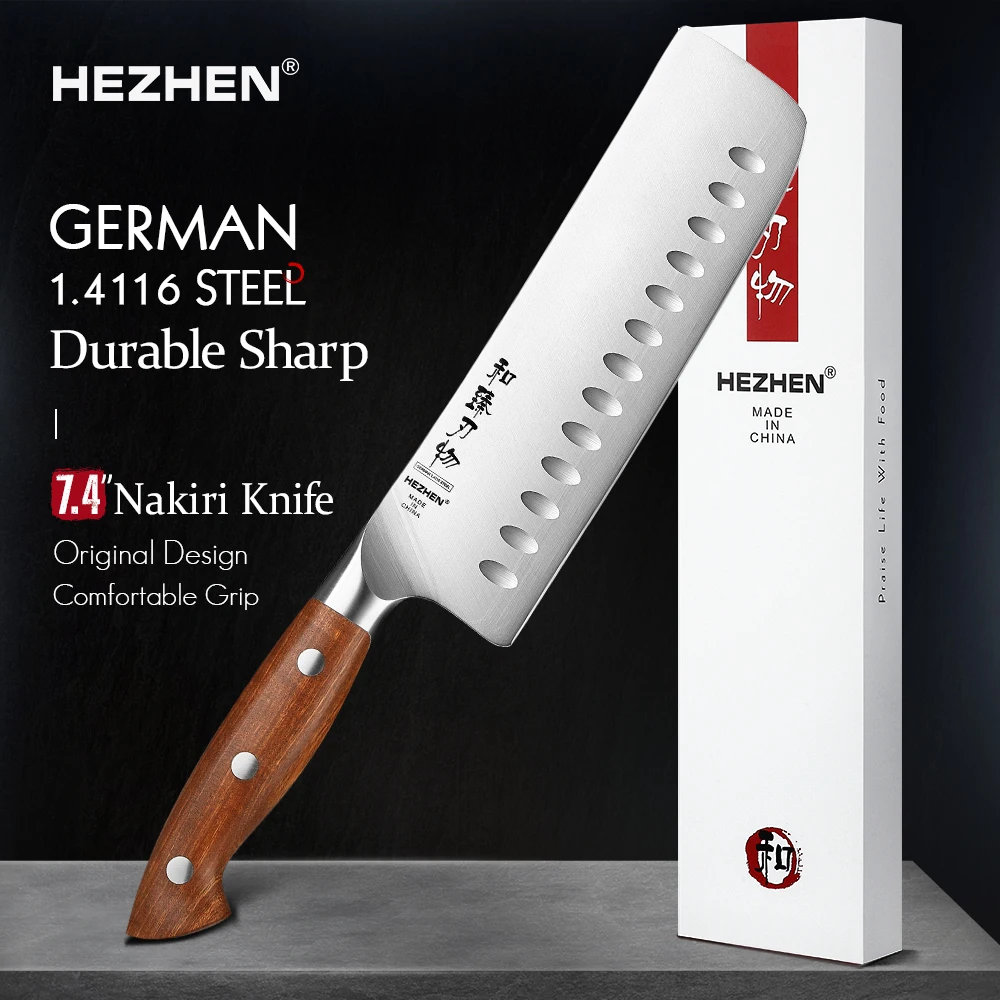
Hezhen 7.4" Supreme Nakiri
At a glance
| Spec | Xinzuo | Hezhen |
|---|---|---|
| Rating | 8.7 | 8.9 |
| Price | $112 | $62 |
| Steel | 67-layer Damascus, 12Cr18MoV core | 1.4116 German Stainless |
| Blade length | 7.2 in / 182 mm | 7.4" |
| Handle | Ebony wood + stainless bolster | Ebony wood |
Category by category
Push-cutting geometry
Thinner behind the edge. Onions and carrots part cleanly without wedging.
Slightly thicker grind — still capable, but you feel the blade push through denser roots.
Edge retention
Harder core (roughly HRC 60) means longer intervals between sharpenings.
Softer steel closer to European hardness. Touch up more often but it's easier to do.
Corrosion & care
Damascus cladding is stainless but the exposed core needs a quick wipe after acidic prep.
Fully stain-resistant. Genuinely low-maintenance.
Aesthetic
The Damascus pattern is the selling point. It looks like a $250 knife on the magnetic strip.
Clean satin finish. Deliberately understated.
Value
You're paying a premium for the pattern and hardness.
Materially cheaper for a knife that will still last a decade of home use.
If cutting performance is the only tiebreaker, the Xinzuo Ji Damascus wins on geometry and edge retention. If you want the honest, low-drama vegetable knife that just gets sharpened on Sunday and put away, Hezhen's 7.4" nakiri is the smarter buy.